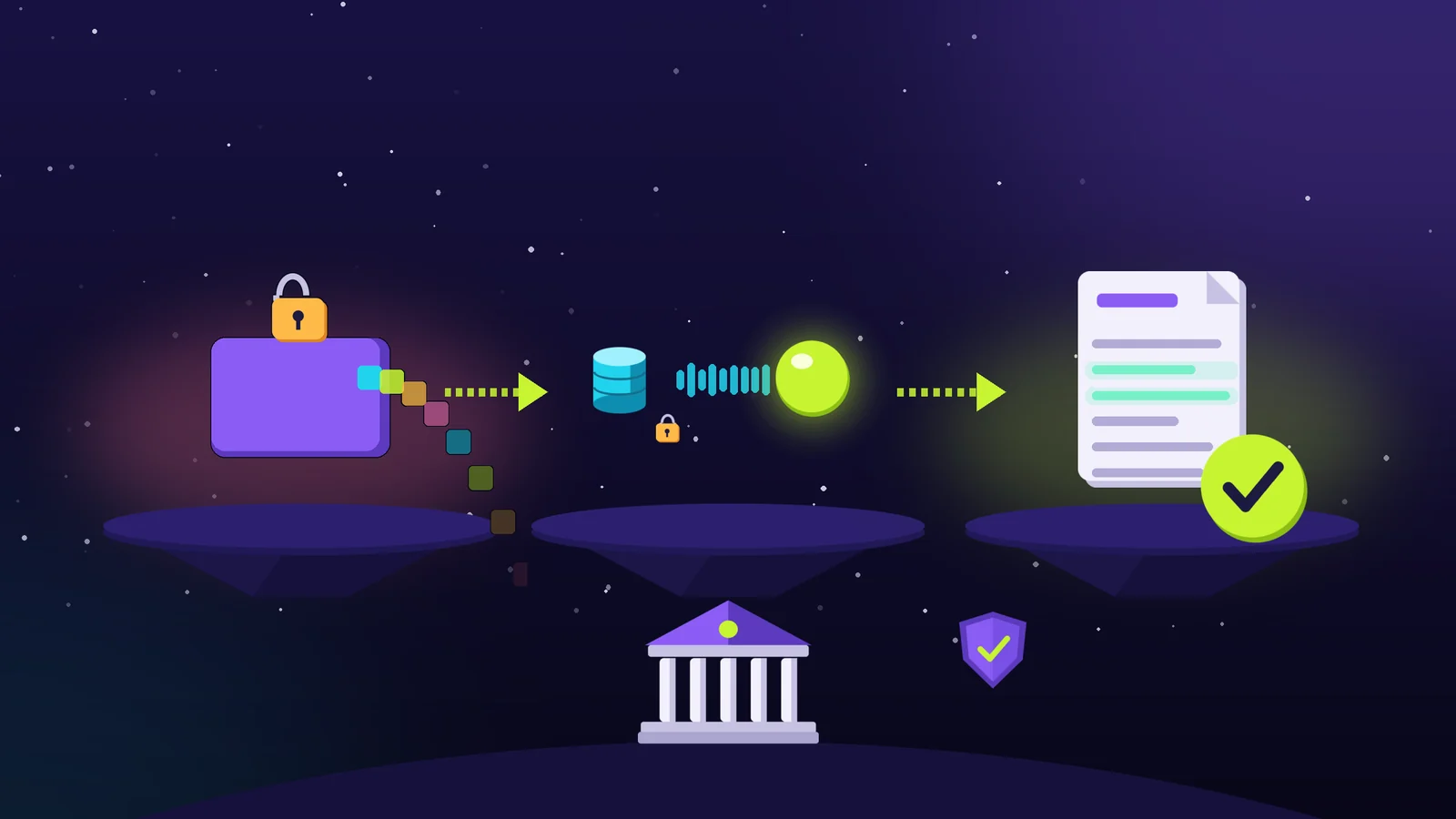
The first question IT and information security ask about any AI project is always the same: “Where does our data go?”. It is a good question. AI works with contracts, meeting recordings, customer data and reports. If that data leaks or is misused, the damage outweighs any minute saved.
Security with AI is not magic, and it is not just a matter of trusting the provider. It comes down to a few specific decisions you can check. Here they are.
Where the data is hosted
The first decision is physical: where the data is processed and stored. For a company in Bulgaria or the Balkans, the answer you want is “in the EU”. That applies to the application server, the database, the backups and the AI models themselves when they process personal data.
Ask specifically: who is the hosting provider, which country is the data centre in, where are the backups. “In the cloud” is not an answer.
What access AI has to your core systems
The second decision is architectural. AI should not have direct access to your ERP, CRM or accounting system. The right model is for AI to work “on top”:
- it receives only the data needed for the specific task;
- it returns a result (a document, a report, a proposal) rather than writing directly;
- anything written to your systems goes through clear rules and human approval;
- access is through a separate user or an API key with limited rights, agreed with IT.
That way, even when something goes wrong, AI cannot change data at the core of the company.
Synthetic data for the demo
The third decision is about the start. You don’t need to hand over real data to see whether AI helps. In the demo we use synthetic data: realistic but made-up records and documents in the same shape as yours. Real data only comes in during the pilot, under a signed contract and NDA.
If a provider wants access to real customer data just for a demo, ask why.
An activity log
The fourth decision is about control. Every AI step and every human approval is recorded in a log: who, when, what. You need this for internal audit, for regulated industries (finance, insurance) and simply for peace of mind. When something goes wrong, the log shows where.
GDPR and contracts
The fifth decision is legal. When a provider processes personal data on your behalf, you need a data processing agreement. It describes what data, for what purpose, how long it is kept and who has access. It is worth involving your data protection officer at the analysis stage, not after the pilot.
An NDA covers the rest: business information, templates, processes. That is why, when we show our real case study, we talk about the process and our own measurements, without the client’s name, systems or internal figures.
What happens when AI gets it wrong
The sixth decision is about mistakes, because there will be some. Language models sometimes “fill in the gaps”: they complete a missing piece with plausible but wrong text. The protection is in the process, not in hope:
- anything unclear is not filled in but flagged “For review” with a quote from the source;
- a person approves every document before it goes out or into your systems;
- responsibility for the decision stays with the person; AI prepares.
In the pilot we also measure accuracy: how many documents pass without correction and what the corrections are. Those numbers are more useful than any promise.
A short checklist for IT
Before you start, ask for written answers to these questions:
- Where is the data hosted and backed up? Is it in the EU?
- Which AI models are used and where do they process the data?
- Does AI have direct access to the ERP, CRM or accounting system?
- What rights does the access have, and who approves it?
- What data is used in the demo?
- Is there a log of AI actions and approvals?
- Is there a data processing agreement and an NDA?
- What happens to the data when the contract ends?
In short
Secure AI in the enterprise means AI in the EU, with no direct access to core systems, synthetic data for the demo, a log and a person who approves. All of this can be checked before you have handed over a single real record.
If you want to see these rules in a working solution, book a demo or read how we protect data.